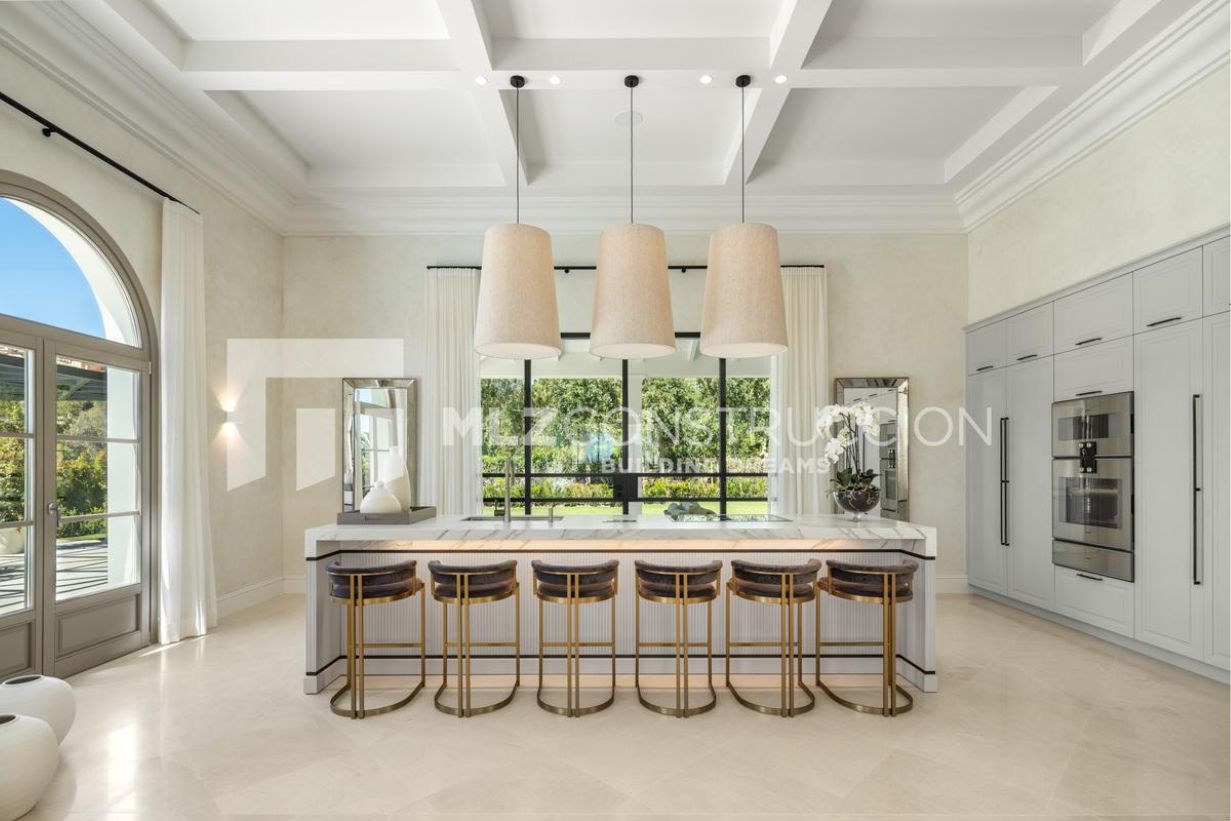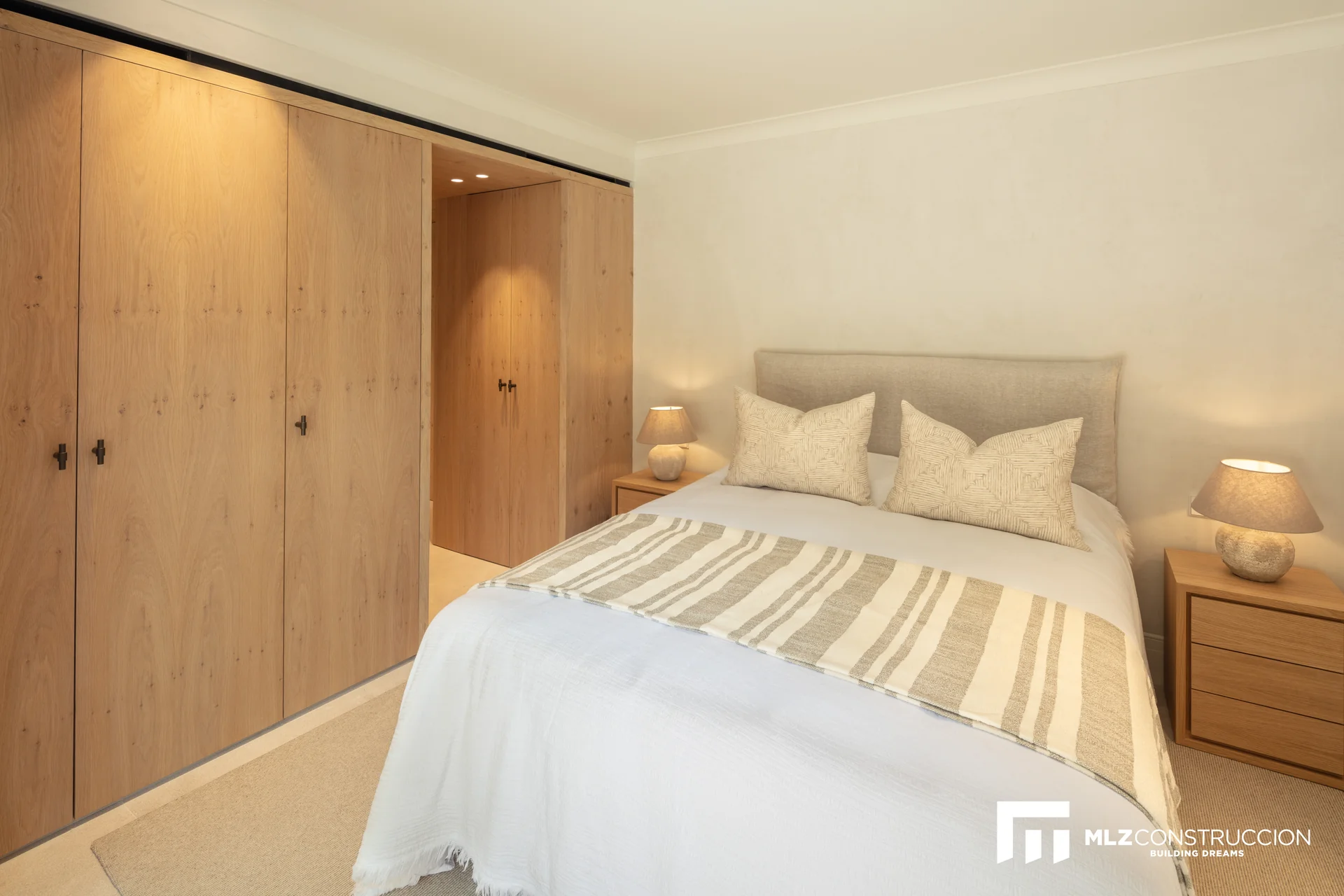
In a villa, the most expensive elements are not always the most visible. Marble, designer kitchens and large aluminium windows and doors are what make an impression on handover day, but many of the decisions that define the real quality of the home remain hidden behind walls, floors, roofs, basements and installations.
This “invisible quality” is what separates a villa that continues to perform perfectly ten years later from one that starts to show damp, cracks or faults shortly after being occupied. We explain it element by element.
Why quality does not depend only on finishes
It is easy to be impressed by interior design. However, excellent finishes applied over a poorly executed construction base are a bad investment: sooner or later, damp, condensation, cracks or maintenance costs will appear, and no surface finish will correct them. Choosing the right construction materials helps, but only if the base they are applied to has been properly executed.
Build quality — foundations and structure, waterproofing, insulation and building services — is what supports everything else. And unlike finishes, it cannot be easily redone once the build has been closed up.
Foundations and structure: the basis of everything
Everything starts below ground. The geotechnical survey determines the type of soil and influences the foundation system; poor concrete control or a badly executed structure can cause problems throughout the entire life of the property. On sloping plots, which are common on the Costa del Sol, retaining walls and adaptation to the terrain are decisive. This stage must be resolved properly from the outset.
Waterproofing: the element that leaves no room for error
This is probably the most critical hidden element in a villa with large terraces, flat roofs and outdoor areas. Poorly executed waterproofing is not visible, but its consequences are: stains, leaks or damp patches can appear months later.
The most sensitive areas are flat roofs, walkable terraces, junctions with walls, swimming pools, basements and planters built over slabs. In all of them, falls, joints and finishes must be resolved in detail, not improvised on site. In coastal areas, with large exposed outdoor surfaces, this is where the difference is made.
Drainage and water evacuation
Many damp problems do not come from inside the property, but from the way water is managed around the home. A well-designed perimeter drainage system, proper rainwater collection and correctly planned external falls drastically reduce water pressure on buried walls and basements.
Thermal and acoustic insulation
Interior comfort and energy bills depend on elements that are not visible either. Thermal bridges in façades, roofs and windows, the quality of the glazing and good acoustic insulation all determine whether the villa feels cool in summer, warm in winter and quiet throughout the year. Choosing the right type of thermal insulation and installing it without gaps or discontinuities reduces air-conditioning consumption year after year.
Hidden installations and pre-installations
Poor planning of installations creates problems that are difficult to correct later: a lack of electrical points, undersized ducts, insufficient climate control, overloaded electrical panels or inaccessible maintenance points.
In a premium villa, it is also advisable to allow for the pre-installations that the owner is likely to want sooner or later:
- Home automation and zoned climate control.
- Photovoltaic panels and aerothermal systems.
- Electric vehicle charging point.
- Security systems, cameras and outdoor lighting.
- Irrigation and telecommunications.
Including these during the build costs only a fraction of what it would cost to open up walls later.
How to check that the build is being properly executed
The owner does not need to be a technical expert, but they can and should require transparency:
- Request the phase planning and certifications.
- Ask for photographic reports of the elements that will later be hidden.
- Visit the site accompanied by the project management team.
- Document waterproofing, installations and drainage systems before walls and ceilings are closed.
A serious construction company will provide this information without the client having to insist.
Common mistakes
- Cutting costs on waterproofing or leaving out drainage systems.
- Installing services without prior planning.
- Choosing expensive finishes over a weak construction base.
- Failing to coordinate the architect, construction company and interior designer.
- Not leaving accessible inspection points for maintenance.
What is invisible is what lasts
A quality villa is not one that only impresses on handover day, but one that continues to perform well ten years later. It is no coincidence that the Spanish Building Act — the LOE — provides protection for a decade against structural defects and for several years against damp or insulation issues: these hidden elements are precisely the ones covered by construction guarantees. At MLZ Construcción, we pay as much attention to the finishes as to what lies behind them, because that is where the real durability of the project is decided.
FAQs
What determines the real quality of a villa? The hidden build quality: foundations and structure, waterproofing, drainage, insulation and building services. Finishes also affect durability, maintenance and comfort, but it is the hidden work that proves decisive in the long run.
Why is waterproofing so important? Because correcting it afterwards is very costly and rarely perfect. Poorly executed waterproofing on roofs, terraces or basements causes damp issues that no finish can solve.
Which parts should be checked before closing walls and ceilings? Waterproofing, installations such as electricity, plumbing and climate control, drainage systems and critical junctions. It is advisable to document them with photographs before they are covered.
How can damp be prevented in a villa? Through good waterproofing, perimeter drainage, correct external falls and ventilation, all planned from the project stage and properly executed on site.
What should the owner require during construction? Phase planning, certifications, photographic reports of hidden elements and site visits with the project management team.
At MLZ Construcción, we take care of both what is visible and what remains hidden in every project. If you are planning a villa in Marbella, Estepona or on the Costa del Sol, we can help you carry out a solid, efficient build designed to last. Tell us about your project.